Social Media Editorial Guidelines: The Real Solution When You're Stuck for Ideas
You open Instagram on a Monday morning. The most recent post was three weeks ago.
You have to publish, but what? This cycle has a name. And contrary to what people tell you, it can’t be cured with ideas.
Take six minutes. Read slowly.
The expected publication rate has skyrocketed. Platforms reward consistency and video content, which pushes everyone to produce more. The problem is that your company doesn’t have any more stories to tell than before. You sell the same products, serve the same customers, and go through the same seasons.
On top of this disconnect is the worst way to manage an account: making decisions on a day-to-day basis, waking up and wondering what to post. This ad-hoc approach wears teams out and results in filler content.
Before
You showcase new arrivals, give a sneak peek at upcoming sales, and build anticipation.
During
You're playing up the scarcity: there won't be enough for everyone. Your subscribers get first dibs.
After
You're keeping the momentum going—this play might come back—and you're already teasing what's next.
Review your last ten posts
Could another company in your industry have published exactly the same thing? If so, eight times out of ten, it's not a lack of ideas—it's a lack of originality.
Define the first arc
Take the next major event in your business and break it down into three parts: before, during, and after. You've just filled a month's worth of posts in twenty minutes.
Sketch your spokesperson
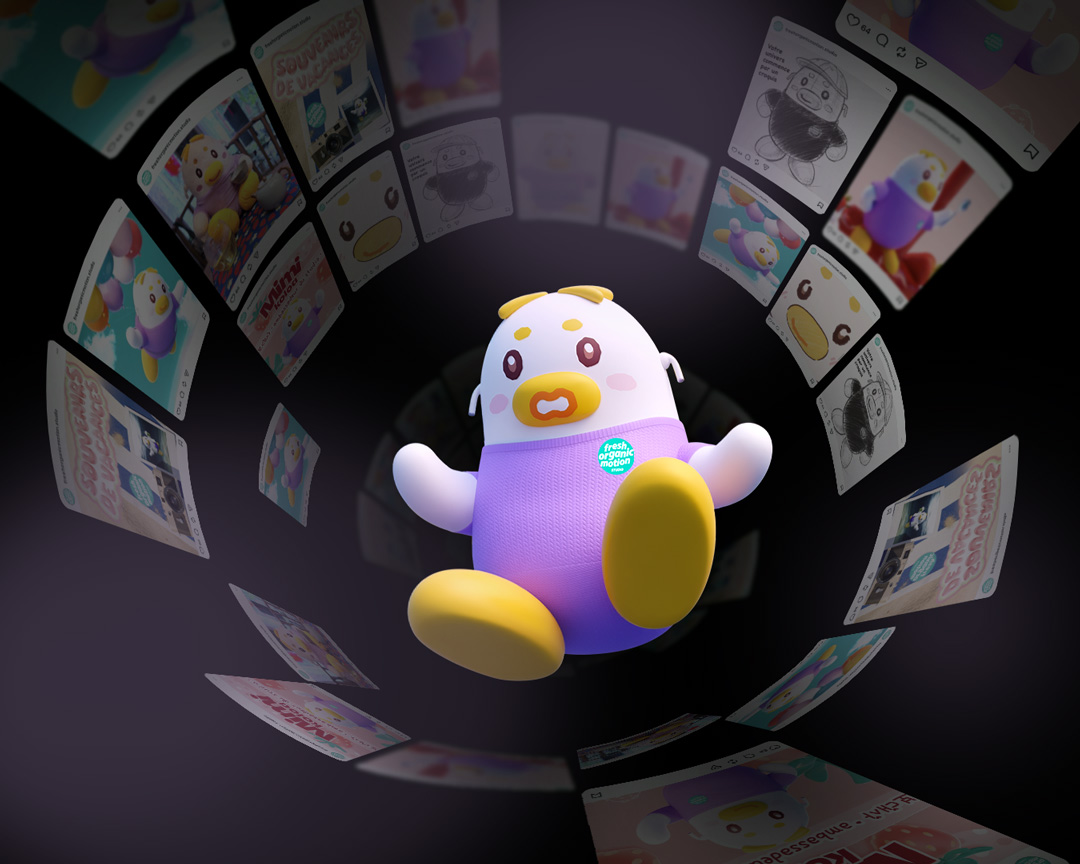
An animal in your logo, an old mascot forgotten in a closet—or start from scratch by asking about the character before you think about the design.
Ready to give your brand a face?
Let's talk about the 2026–2027 school year. Let's take a look together at how to break it down week by week.
Frequently Asked Questions
Without current events, a typical account has nothing to say. A character, on the other hand, always has something going on: they react to the season, get bored, or make plans. A lull in current events becomes a moment in their life—and thus a post.
It's better to post twice a week all year long than to post once a day for three weeks followed by two months of silence. A narrative arc makes this consistency sustainable.
Stop looking for ideas for posts and start looking for stories to tell. Your competitors can copy a format, but they can never copy your perspective—especially when it’s embodied by a character.
Yes, and that's often where it pays off the most. In an industry where everyone communicates in a corporate style, a personality creates an immediate and memorable contrast.
It takes a few months of regular posts for your audience to become engaged. You’ll quickly see the first results in terms of people pausing as they scroll, but it’s consistency that turns a character into a brand asset.