Workplace Safety Mascot for Businesses and Industrial Sites
In industrial settings, safety instructions are everywhere.
On the walls, in welcome booklets, and in mandatory training sessions.
And yet, accidents continue to happen.
Not because of a lack of information, but because of a lack of support.
A workplace safety mascot is no substitute for regulations.
It does something that signs can't: it creates an emotional connection with your teams.
And it is this connection that changes behavior.
Why Companies Create a Mascot for Workplace Safety
Occupational risk prevention suffers from a perception problem. The messages are seen as technical, repetitive, faceless directives handed down from above. As a result, employees know them by heart but do not consistently follow them. That’s only human.
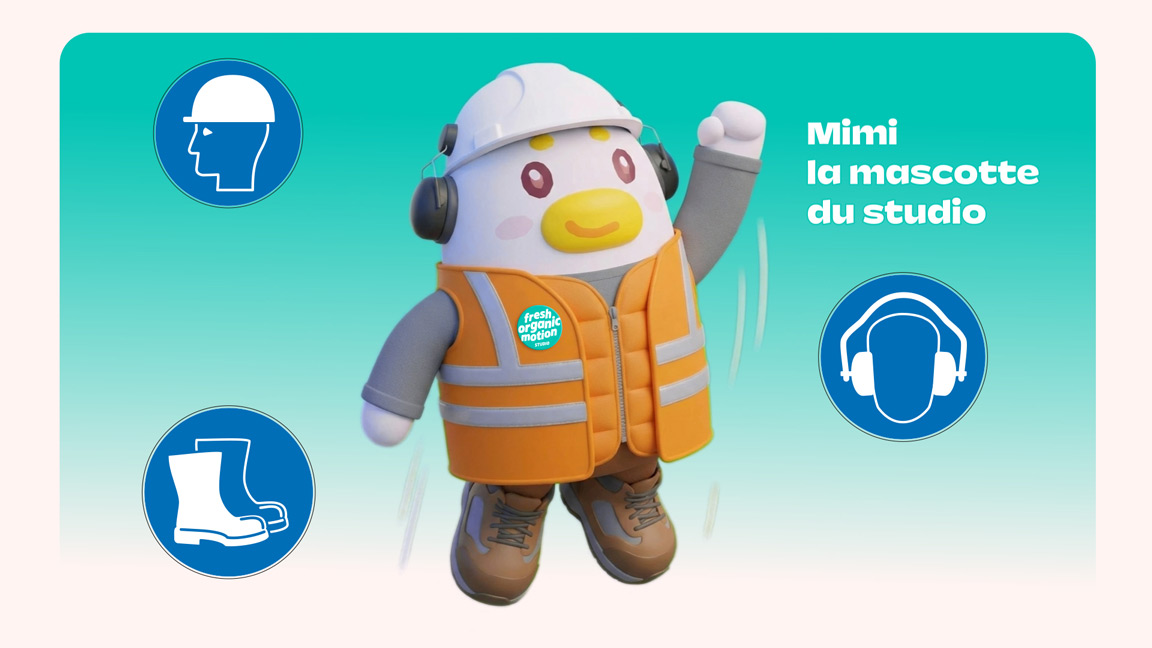
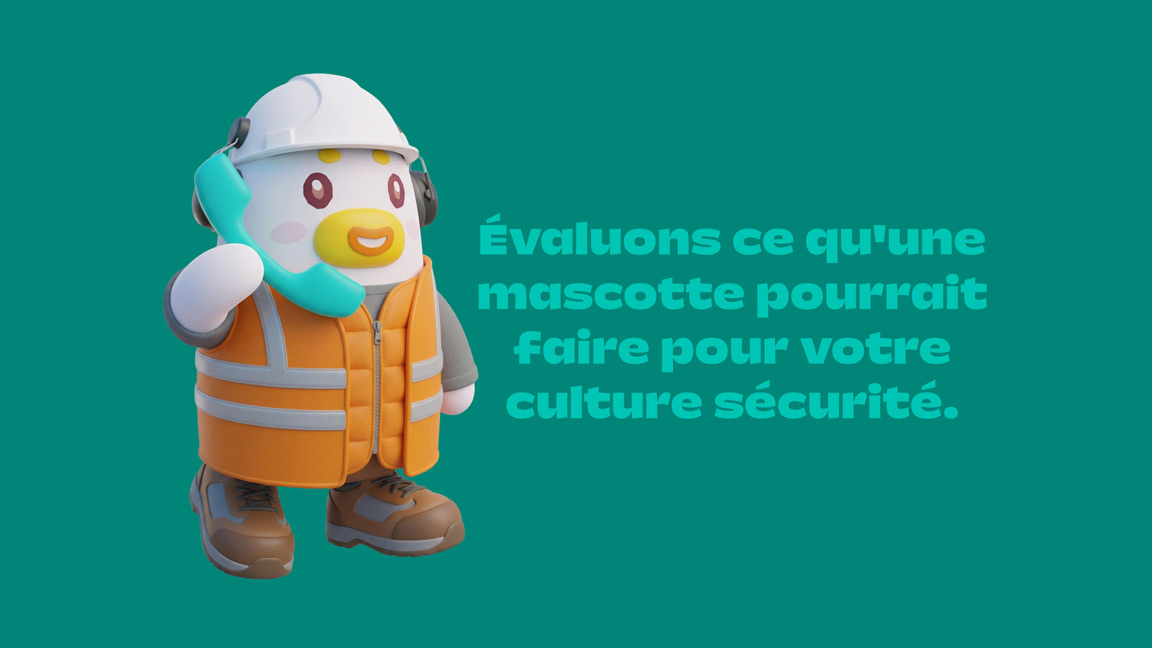
On the other hand, a familiar character changes the dynamic. Specifically, when a mascot wears a hard hat, a high-visibility vest, and safety shoes across all your media, it sets an example rather than imposing one. It makes the rule visible, consistent, and repeated without coming across as authoritarian. This is exactly what the INRS recommends in its educational guides on health and safety communication: a narrative and visual approach significantly improves retention of safety instructions compared to signs alone.
In addition, a safety mascot can be adapted to any situation: new hires learning about your safety culture, seasonal reminders about specific risks, or internal campaigns about a new protocol. It’s a dynamic communication tool, not a static sign.
- Prevention messages perceived as boring or too technical.
- Difficulty maintaining employee commitment over the long term.
- Need to reinforce the company's safety culture.
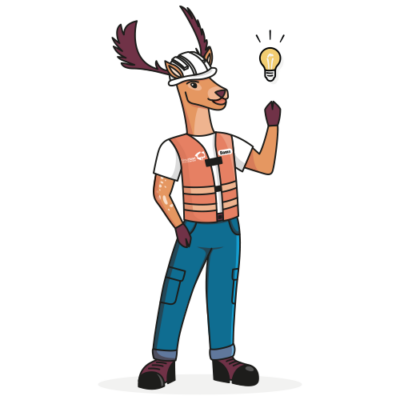
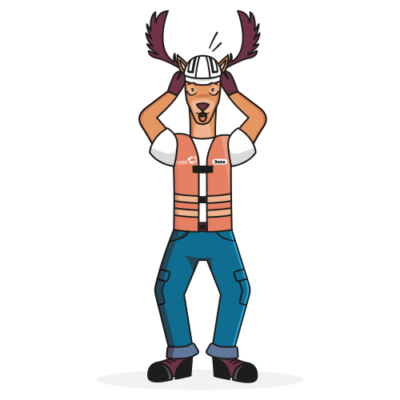
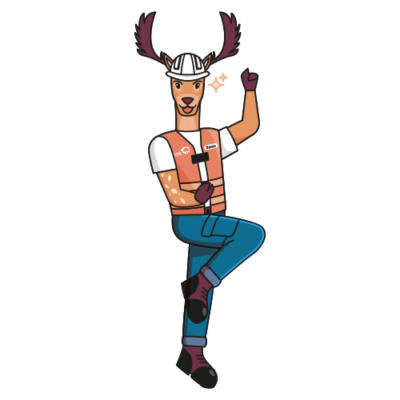
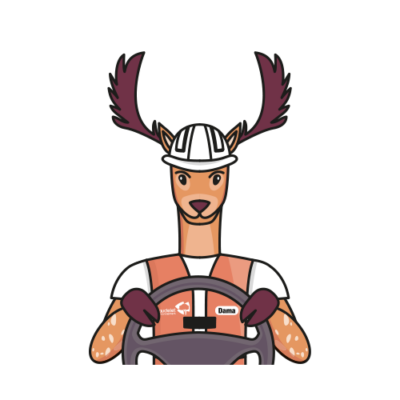
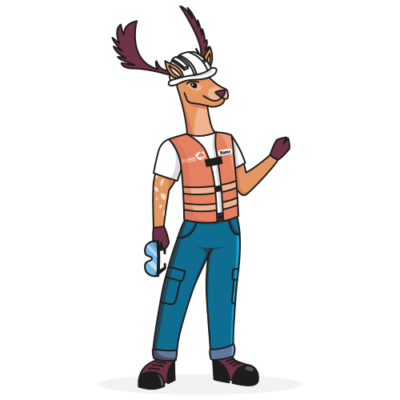
Case Study: DAMA, the Baudelet Environnement Group’s Safety Mascot
Background
The Baudelet Environnement Group is a major player in waste management and recycling in northern France, based in Blaringhem. With several industrial sites, field teams exposed to daily risks, and a rigorous QSE policy endorsed by senior management, Baudelet faced a specific challenge: to make the safety culture come alive, memorable, and embraced by all employees—not just displayed on regulatory signs.
The Request
The project manager contacted Fresh Organic Motion with a clear request: to design a mascot and a visual identity to give occupational safety and health a relatable face. The brief was ambitious. The mascot had to embody the group’s values, be credible to field teams, and be adaptable for use across all internal media.
The Solution
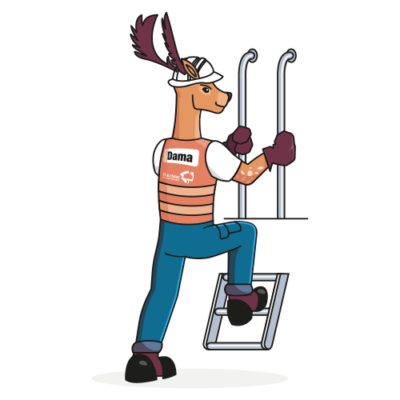
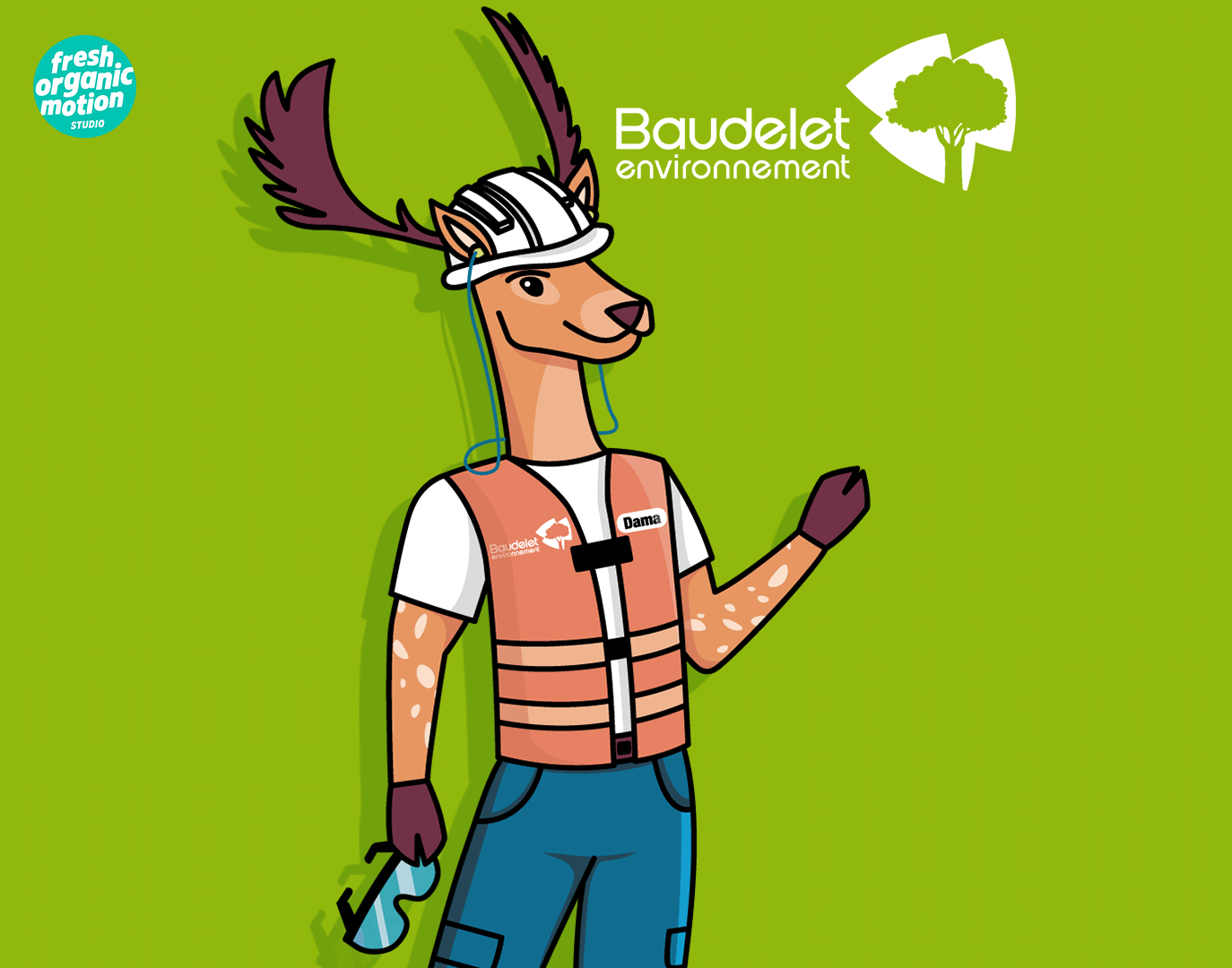
Fresh Organic Motion has designed DAMA, a digital deer inspired by the animals that inhabit the group’s eco-park.
This choice is significant: it anchors the mascot in Baudelet’s regional and environmental identity, making the character immediately recognizable and credible to the teams.
A generic character would not have had the same effect of making the audience feel a sense of ownership.
DAMA was then incorporated into all internal communication materials related to safety. These included QHSE posters illustrating the Group’s four essential rules, QSE policy documents, training materials, internal newsletters, and on-site signage.
In each version, DAMA wears PPE appropriate to the context, which reinforces the educational message through visual examples rather than textual instructions.
What DAMA Has Changed
Before DAMA, safety rules existed but were perceived as administrative requirements. With DAMA, they become a message from a familiar character that teams see across various media. The mascot creates visual continuity between the poster in the warehouse, the handout provided during training, and the monthly newsletter. This consistent repetition is what truly embeds these behaviors over time.
Today, the Baudelet Group has a sustainable internal communications resource that can be adapted in countless ways to suit prevention campaigns, the seasons, and new risks identified at its sites.
What the INRS Says About Mascots and Safety Communication
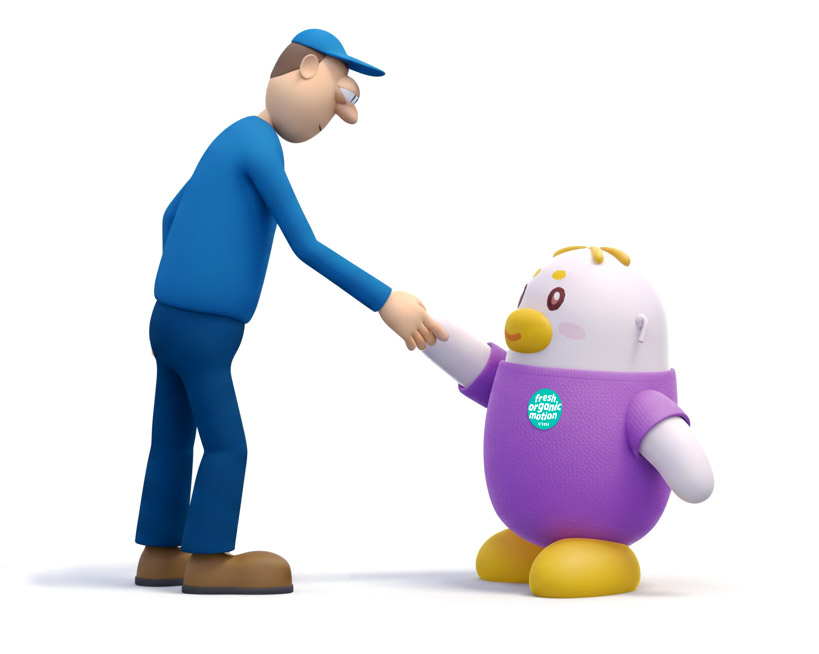
The National Institute for Research and Safety provides specific guidelines for the use of graphic representations in safety prevention. It is important to understand these guidelines before embarking on a safety mascot project.
On the one hand, regulatory signage remains untouchable.
The shapes, colors, and symbols on the signs are standardized and cannot be altered. 🔵 Blue circle for mandatory signs, ⚠️ yellow triangle for warning signs, ✅ green square for emergency signs: these codes are defined by regulation, and a mascot cannot replace or modify them.
On the other hand, the mascot is perfectly acceptable as an educational supplement.
That is precisely what the Napo films produced by the INRS itself do: they use an animated character to illustrate best practices, tell short stories, and make safety guidelines accessible to everyone, including employees who have difficulty reading. A well-designed safety mascot follows the same logic.
In practice, this means that your mascot can wear your PPE, illustrate your protocols, and appear on your internal posters and training materials—provided it never replaces existing regulatory signs.
What PPE and equipment can your mascot wear?
This is one of the first questions HSE managers ask. The answer is simple: all the equipment your employees wear can be replicated on your mascot, with whatever level of detail you desire.
Specifically, the PPE items most commonly featured on safety mascots are hard hats, high-visibility vests, safety shoes, gloves, fall arrest harnesses, safety goggles, respirators, and hearing protection. Each new prevention campaign can feature a new pose of your mascot, equipped differently depending on the targeted risk.
This system of variations is one of the major advantages of a mascot over a static illustration: you create the character once, and then you can adapt it in countless ways to suit your needs.
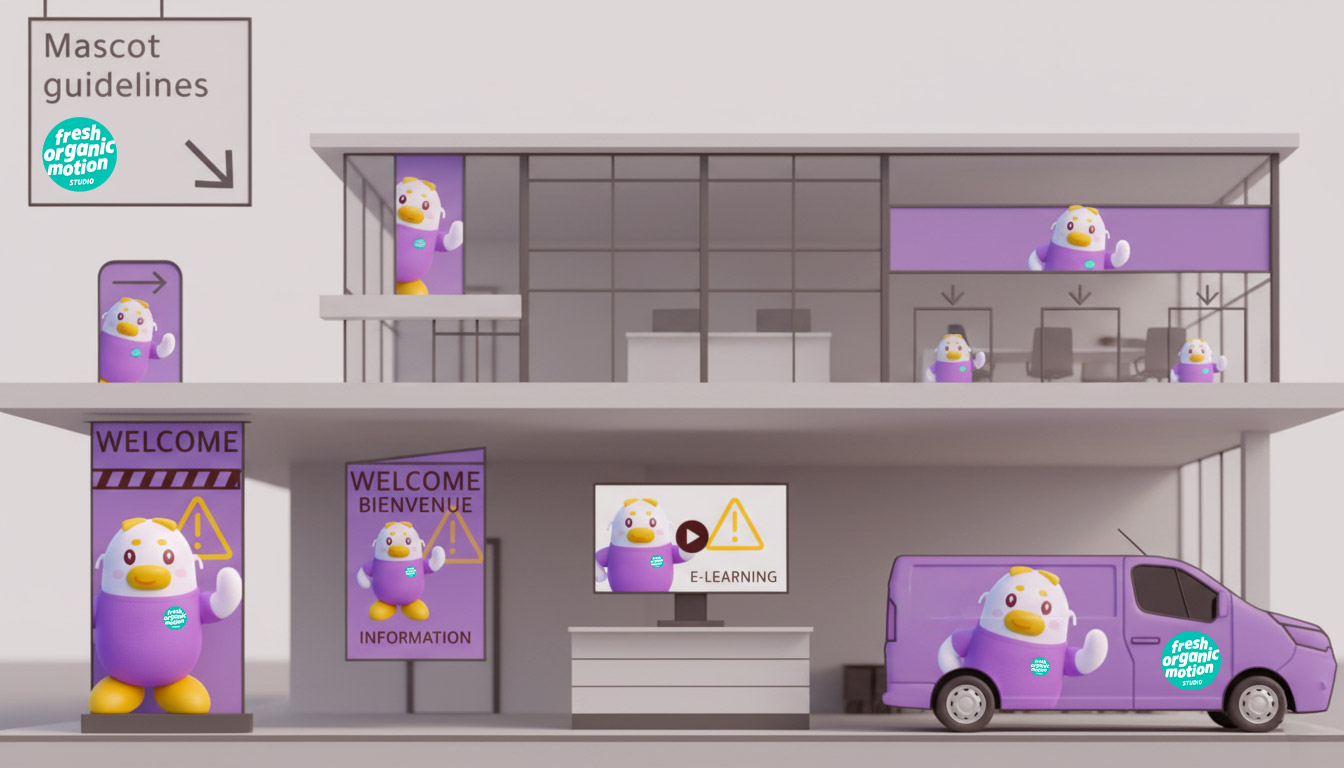
💡 Tip: A well-equipped mascot catches the eye, amuses... and effectively raises awareness for all audiences!
How to Create a Workplace Safety Mascot
wThe process of creating a safety mascot follows the same steps as that for any brand mascot, with specific considerations unique to the industrial context.
First, we define the specific purpose of the mascot.
Is it intended to support newcomers?
Need a reminder of the guidelines for a specific position?
To embody the Group's safety culture as a whole?
This response sets the tone, style, and initial poses to be created.
Next, we define the character's identity.
An effective safety mascot is not a generic character.
It should resonate with your company's identity, your industry, and your values.
That's what fosters a sense of ownership among the teams.
A deer for a company that manages an eco-park, a sturdy character for a construction site, an agile character for a logistics warehouse: the choice makes sense.
Finally, we plan the variations from the very beginning.
Which media outlets will feature the mascot over the next six months?
Posters, training sessions, newsletters, signage, an internal app?
Defining this before you start drawing ensures that the character is immediately ready for use across all your platforms.
Where should I start?
If you are an HSE manager, QSE director, or communications manager at an industrial company, your first meeting with Fresh Organic Motion will last 30 minutes.
Together, we'll define your mascot's purpose, the priority media, and a budget tailored to your project.
It's free, with no strings attached, and that's always where the best projects start.
No, and that’s precisely what makes a well-designed safety mascot so valuable. A generic, off-the-shelf mascot doesn’t foster a sense of ownership among your teams because it doesn’t resemble them and doesn’t embody your corporate culture. Fresh Organic Motion creates custom mascots, designed based on your identity, your values, and your on-the-ground constraints. It’s this customization that fosters buy-in.
Fresh Organic Motion is a French studio specializing in the creation of digital brand mascots, based in Lille and serving clients throughout France. Notably, the studio designed DAMA for the Baudelet Environnement Group, a safety mascot featured across all of the group’s QHSE materials. It is one of the few agencies in France to combine expertise in character design with an understanding of the challenges of internal communication in an industrial setting.
Creating a safety mascot always begins with defining its specific purpose: to support new employees, remind them of specific guidelines, and embody the company’s overall safety culture. Next comes the character design, which is rooted in the identity and context of your industry. Finally, we plan the various applications based on your priority media: posters, training materials, newsletters, and signage. Fresh Organic Motion guides you through every step of this process.
A 2D workplace safety mascot begins to 1,200€ (excluding tax) at Fresh Organic Motion. This rate includes sketches, graphic design, and files optimized for your print and digital media. Additional variations are subject to a separate quote with a volume discount if multiple poses are ordered at the same time. The initial consultation is free and allows us to provide a quote tailored to your project.
Yes, provided that a simple principle is followed: the mascot is an educational supplement, never a substitute for regulatory signage. Standardized signs must remain unchanged in their shapes and colors. The mascot can illustrate best practices, wear PPE, and appear on posters and in training materials, consistent with these signs. This is exactly the approach the INRS uses in its own Napo videos.
The most active sectors are manufacturing, logistics, construction, waste management, and transportation. Companies such as Baudelet Environnement have already taken the plunge, with tangible results in terms of team buy-in. The INRS itself uses Napo, an animated character, in its national prevention campaigns. Internationally, major industrial groups have been using safety mascots for decades to foster a culture of prevention at their sites.