Kit, la mascotte de Firefox : quand une marque choisit l’émotion pour reconquérir sa liberté
There are marketing decisions that resemble communication.
And there are others that seem like a matter of survival.
Firefox will account for only 3.87% of the global market share in 2025.
A slow, steady decline that shows just how much Mozilla needs to step up its efforts to stay in the race.
Faced with Chrome, which dominates the market; Safari, which locks users into the Apple ecosystem; and browsers that incorporate intrusive AI, Firefox had two options: fade away quietly, or reinvent itself.
Mozilla has decided to make a comeback with a new look.
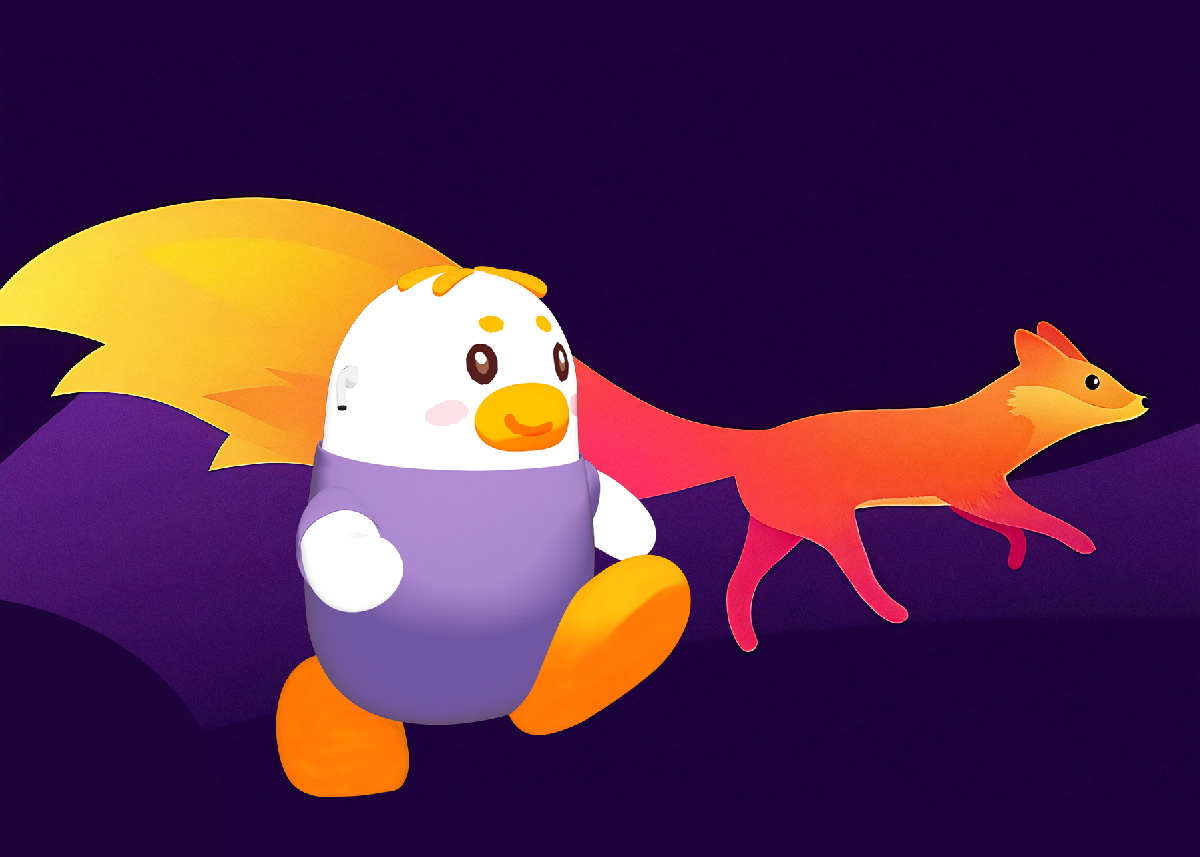
Kit: Neither a fox nor a red panda, but something even more powerful
In practical terms, Mozilla describes Kit as a creature in its own right, inspired by both the fox and the red panda, with an almost magical touch. Its design is based on bold choices: no mouth, to avoid the «chatty mascot» effect, but expressiveness conveyed through the eyes, posture, and movements. Its intricately designed tail becomes a key element for conveying emotions and dynamism.
This detail—the missing mouth—is remarkable. It says something essential about the intention behind Kit: this character isn’t there to speak for you. It’s there to support you. Unlike the intrusive assistants that major platforms deploy on a massive scale, Kit is designed to be discreet and encouraging. The idea is to humanize the browser to remind us that, behind the code, Firefox remains a structure built for people—not for billionaires or data monetization.
In other words, in a world where Google is watching you and AI systems are recording your conversations, Kit shows up with his hands in his pockets, with no hidden agenda, just wanting to be there.
It's a stance. And it's politics.
Public Relations: The Art of Persuading Without Seeming to
Edward Bernays, Freud’s nephew and the father of modern public relations, wrote a sentence in his 1928 book *Propaganda* that took the marketing industry decades to truly understand: the masses do not change their behavior because they are given rational arguments. They change because they feel something. Because they identify with something. Because a symbol speaks to them more powerfully than a speech.
Well, that's exactly what Kit is.
Mozilla can't win the feature war against Google. It can't win the marketing budget war against Apple. Nor can it win the AI war against Microsoft.
On the other hand, it can win the battle for meaning. It can embody something its competitors cannot: digital freedom, an internet that belongs to its users, and peaceful resistance against mass surveillance.
And to embody something abstract, you need a face. Mozilla describes Kit as a companion that guides you as you browse a private, open internet that belongs to you. So it’s not a browser mascot. It’s a symbol of resistance made adorable.
Bernays would have loved it.
Visual renewal as a political act
Firefox version 149 includes a free VPN, initially available in France, Germany, the United Kingdom, and the United States. It’s practical, it’s useful, and it’s technical.
But Kit, on the other hand, is emotional.
And in communication, emotion always comes before reason.
Behind this mascot, developed by the JKR agency and illustrator Marco Palmieri, lies a much deeper reflection on the evolution of the Internet.
This isn't a graphic design project. It's an ideological repositioning project brought to life by a little fox with big, expressive eyes.
In other words, Kit embodies the values that Mozilla has always stood for:
A private, open internet that belongs to you. These values existed long before Kit. They appeared in speeches, press releases, and “About” pages. But they had no face. And without a face, values remain abstract. They don’t resonate.
Kit, on the other hand, is interactive. Kit jumps. Kit exists in the real world with merchandise, wallpapers, and stickers.
Mozilla didn't do things by halves: the little fox doesn't just show up on a web page—it also makes an appearance in Firefox and even in real life.
That's exactly what the best mascots do.
They bridge the gap between the digital and the physical worlds.
They become objects, stuffed animals, and stickers on laptops.
They exist outside their original context.
And that's when they really become powerful.
What Kit Teaches All Brands
At Fresh Organic Motion, we've been observing for years that special moment when a brand realizes that words alone are no longer enough.
Firefox has been in this situation for a long time. The brand stands for strong, genuine values and, in some respects, is technically superior to its competitors.
And yet, she was losing ground.
Because arguments don't win the battle for attention.
The characters, yes.
Kit thus emerges as the visual embodiment of a manifesto.
He didn't say anything.
He doesn't have a mouth.
But that says it all: I'm on your side; I'm not spying on you. I'm here to help you browse freely on the internet that belongs to you.
It's a political speech made charming.
And that's exactly why it works.
As Bernays theorized, symbols are more powerful than arguments.
A well-designed mascot is a symbol. It embodies values, a promise, and a connection. It speaks to the emotional brain before it speaks to the rational brain. It creates a sense of familiarity before it creates a sense of conviction.
Mozilla has figured that out. Maybe a little late. But the right time to create a mascot is always now.
What This Means for Your Brand
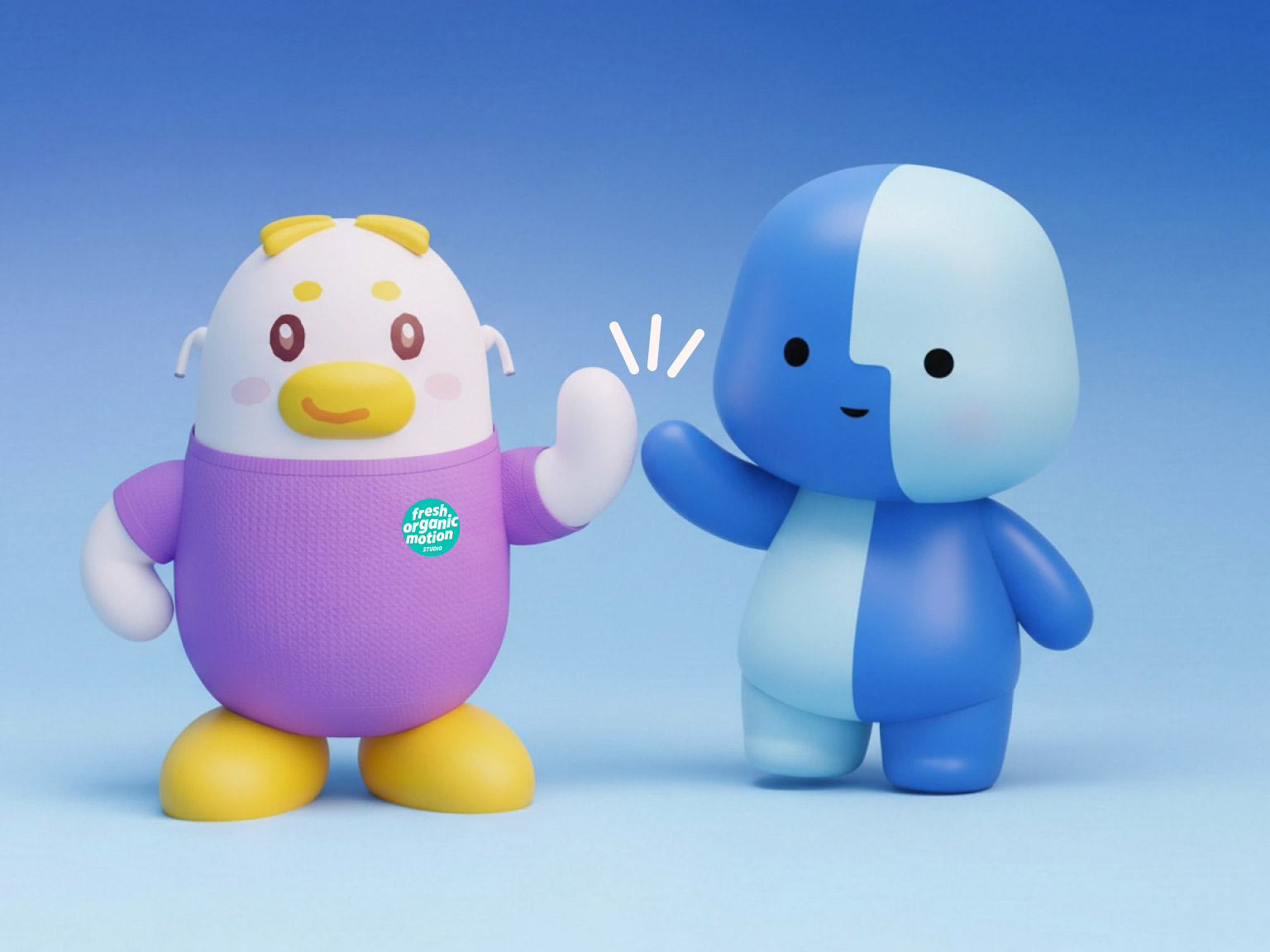
In the end, Kit and Lil’ Finder Guy teach us the same thing from two different perspectives.
On the one hand, Apple created a mascot to connect with an audience it could no longer reach using its usual approach.
On the other hand, Mozilla created a mascot to embody values that it could no longer convey through words alone.
In both cases, the decision stems from the same source: a specific objective, not a chart pattern.
In fact, that’s the question we ask every client before we draw a single line at Fresh Organic Motion: What do you want your mascot to do for you?
Not what it should look like. Not what style it should be. What it should do.
For Firefox, the answer was clear: to embody digital freedom in a way that was compelling enough to make people want to defend it alongside them.
Your answer will be different. But it exists. And it is that answer that must guide everything else.
Do you want to create a mascot that embodies what your brand truly stands for?
Let's start with the right question: What do you want her to do for you?