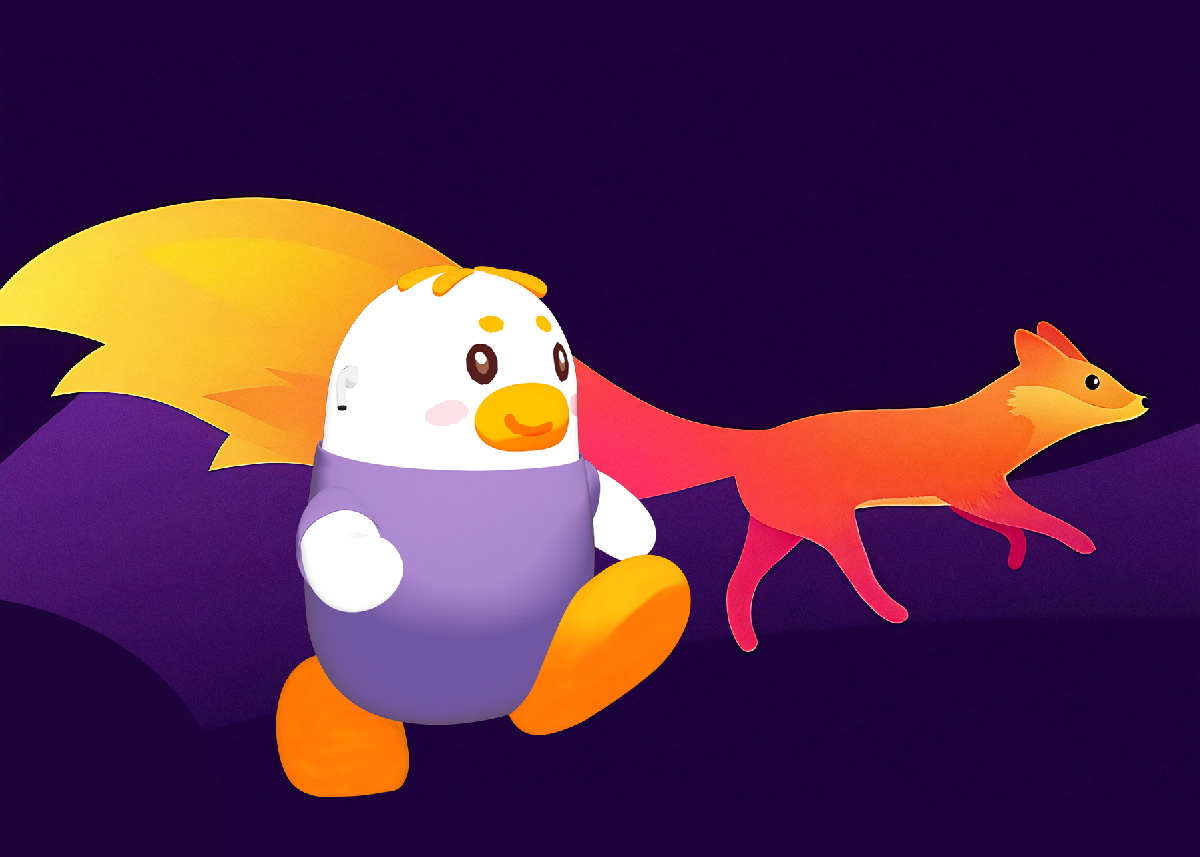
Lil’ Finder Guy : quand Apple sort de sa zone de confort pour parler à une nouvelle génération
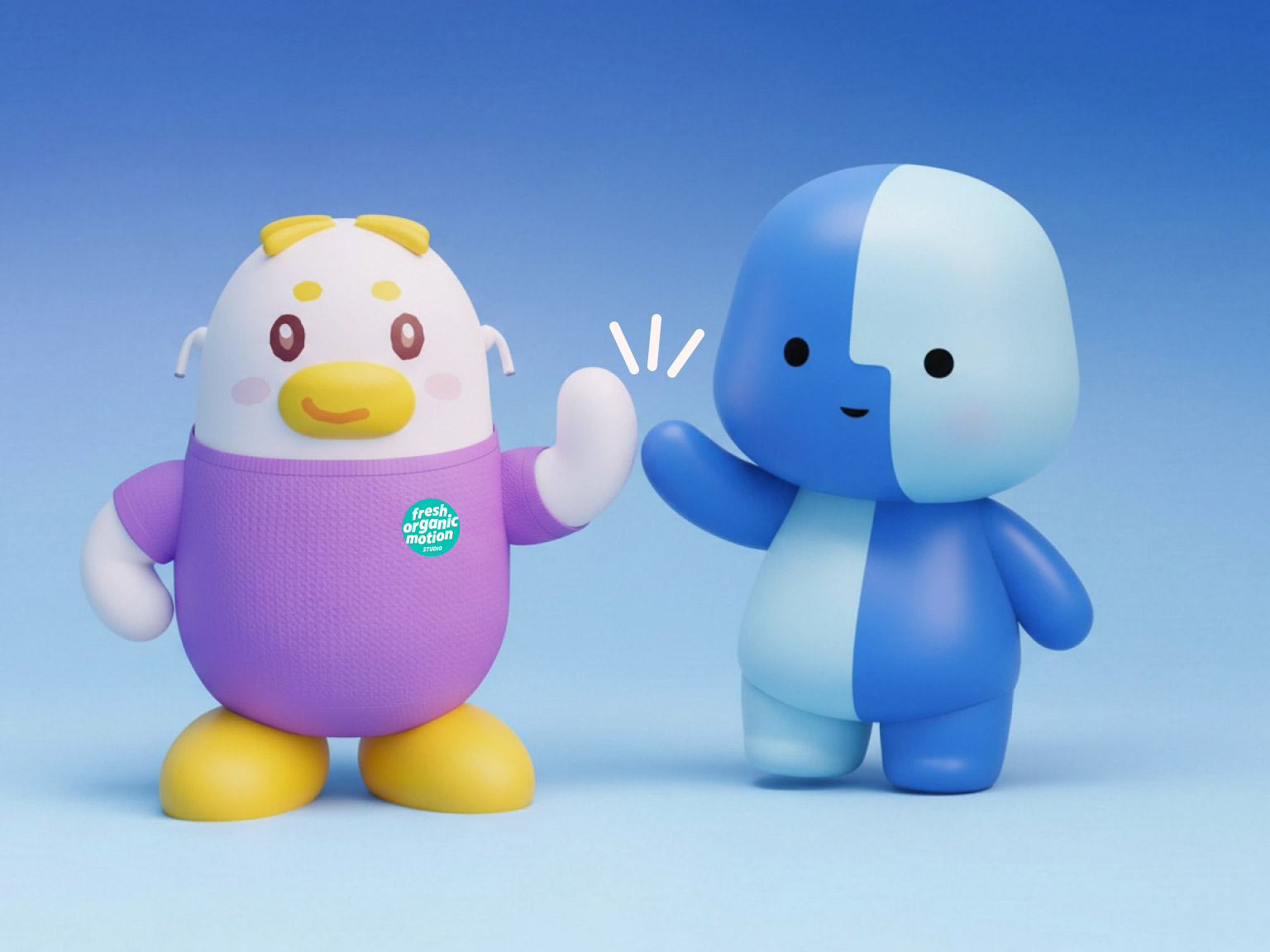
To mark the launch of its MacBook Neo, Apple surprised everyone by bringing to life a little character inspired by the Finder, which internet users quickly dubbed ’Lil’ Finder Guy.” A 3D clay-rendered figurine sipping iced matcha in a quirky TikTok live stream. Unlikely. Unexpected. And yet perfectly calculated.
At Fresh Organic Motion, we keep a close eye on what's happening in the world of brand mascots.
Because when Apple does something, it's never by accident.
The world's most tightly controlled brand has just let go of control
Apple is the company that has elevated communication to an art form. Every keynote is a choreographed performance. Every commercial is a short film. And every pixel on their website looks like a contemporary art museum. For decades, the rule was simple: Apple doesn’t follow trends—Apple creates them.
In addition, on Instagram, the brand remains focused on “Shot on iPhone” content. On YouTube, however, it features long-form content, miniseries, and short films. On Twitter, Apple has exactly zero posts. Everything is under control. Everything is planned. Everything is perfect.
Then, on March 4, 2026, in the corner of a TikTok video, a small square silhouette with a smiling face appeared. Barely visible, almost by accident. A few hours later, a screenshot from a livestream titled «Matcha Break with MacBook Neo» was circulating on X, and the Apple community was abuzz.
Why Apple Took the Plunge
So the answer comes down to one number: 699 euros. That’s the price of the MacBook Neo, Apple’s first affordable computer, clearly aimed at a young audience—Gen Z and Gen Alpha—who likely grew up without ever owning a Mac.
And that’s the whole logic behind the decision. This generation isn’t interested in solemn keynotes. What’s more, they don’t watch ads that have won awards at Cannes. They scroll through TikTok, they consume the absurd, and they value authenticity over perfection. Speaking to them using Apple’s usual language would have been about as effective as speaking Japanese to someone who only knows Breton.
The tone is lighthearted and fun, and Apple has even enabled comments on its videos, which is actually quite rare for the company.
This is no small matter. For Apple, enabling comments means accepting that it will lose control of the narrative. It’s telling its community: You’re part of the story.
And the community responded. Fans used artificial intelligence tools to reconstruct the character’s entire body based on his only known appearance. Others generated 3D models, variations in facial expressions, and animations showing the little guy running, laughing, or working. Apple created a character; the community brought it to life.
What Lil’ Finder Guy Teaches Us About Mascots
This is where it gets interesting for us.
A mascot isn't a drawing. Nor is it a graphic trend. It's a strategic tool that must serve a specific purpose at a specific time. Apple didn't create it to replace its brand identity; it created it to reach an audience that its usual brand identity can't reach.
The brand, which has long been impervious to the conventions of internet culture, seems to be exploring new territory with TikTok: a less controlled, more spontaneous approach to communication that leaves room for interpretation and play.
That’s exactly what we’ve been seeing for years in our work. Brands that think a mascot has to be consistent with everything they’ve always done are missing the point. A mascot can play a different role depending on the context, the medium, and the target audience. It can be understated on the corporate website and quirky on TikTok. It can be reassuring during onboarding and entertaining in a social media campaign. What matters is that the role is defined before the design.
Apple did exactly that. Before designing Lil’ Finder Guy, someone in a meeting asked: What do we want this character to do for us? The answer was clear: to create an emotional connection with a generation that doesn’t know us yet.
The Lesson for Your Brand
Apple isn't the first major brand to take this gamble. Some see it as a nostalgic nod to the Happy Mac, the old smiling icon that greeted users when they booted up their Macintosh computers in the 1980s.
What's remarkable is that the character is based on something that actually exists—the Finder icon that every Mac user is familiar with—reinterpreted in a new visual language.
It's not a complete break.
This is a translation. It's one of the things we teach our clients.
An effective mascot doesn’t just appear out of thin air. It draws on the brand’s existing DNA to create a version that is accessible, memorable, and emotional. It doesn’t replace the brand’s identity; rather, it amplifies it by adding a human dimension that the logo alone cannot embody.
The real question Lil’ Finder Guy is asking isn’t «Did Apple do the right thing?»—it’s «What’s your brand waiting for to do the same?»
It's not the same in the sense of copying Apple.
Same thing in the sense of "daring.".
Dare to identify the audience that your usual communication doesn't reach. Dare to create a character who speaks a different language. Dare to step outside your comfort zone when the product or the moment calls for it.
For a brief moment, Loewe and Apple competed to be the funniest brand on TikTok.
Two premium brands with established identities and discerning customers. And yet.
What This Means for Mascot Design in 2026
Lil’ Finder Guy arrives at a time when brand mascots are experiencing a global resurgence.
Algorithms favor recognizable characters.
Audiences are craving a human touch in an increasingly automated world.
What we've learned from this campaign at Fresh Organic Motion: the most effective mascot isn't necessarily the most elaborate one.
It’s the one that addresses the right objective, at the right time, in the right tone.
Lil’ Finder Guy may just be a minor detail in the corner of a TikTok video.
But this detail generated more buzz than years of flawless ads.
Because he was alive. Because he was human. Because he made you want to find him again.
That's what you call a mascot doing its job.
Do you want to create a mascot that does its job for your brand? Let's start with the right question: What do you want it to do for you?